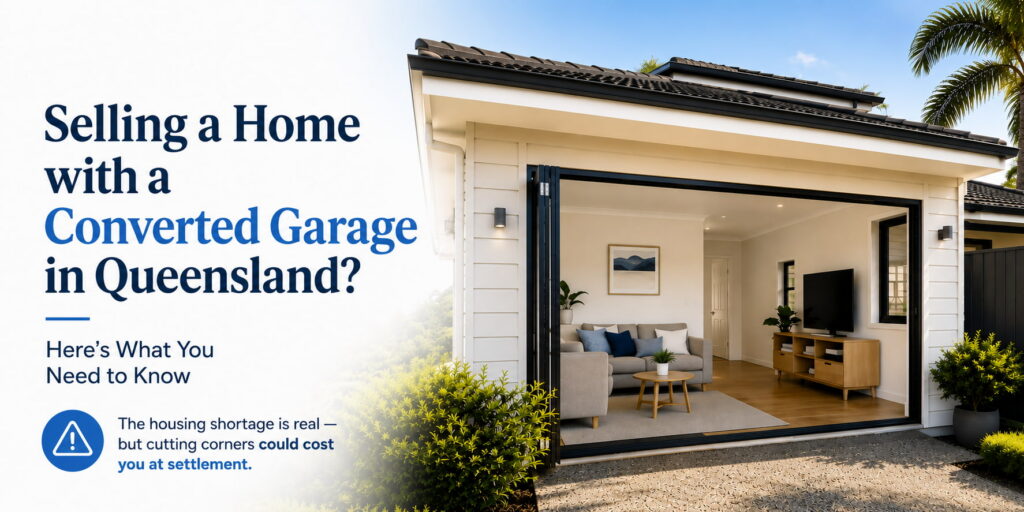
Selling a home with a converted garage in Queensland can attract more buyers and increase perceived value, but approval status, compliance and disclosure obligations can significantly influence your final sale price.
The housing shortage is real – but cutting corners could cost you at settlement.
If you’re selling a home with a converted garage in Queensland, it’s important to understand how the conversion may affect your sale. While a converted garage can provide valuable extra living space and increase buyer interest, it can also raise questions about building approvals, compliance, insurance and property disclosures.
Many Queensland homeowners have transformed garages into bedrooms, home offices, media rooms, gyms or self-contained living areas. However, not all garage conversions have been completed with the necessary approvals. If the conversion is unapproved, buyers, solicitors and lenders may view the property differently, potentially affecting negotiations, finance approval and settlement.
Whether your garage conversion was completed recently or many years ago, understanding its approval status before listing your property can help avoid surprises and ensure a smoother sale process.
This guide explains what Queensland sellers need to know about garage conversion approvals, Form 21 certificates, retrospective approvals and how converted garages are assessed during a property transaction.
Selling a Home with a Converted Garage in Queensland
A converted garage can be a valuable selling feature, particularly in areas where buyers are looking for additional bedrooms, home offices or flexible living spaces.
However, unlike cosmetic renovations, converting a garage into a habitable room often involves building work that may require approval under Queensland building laws. Buyers are becoming increasingly aware of compliance issues and often ask questions about approvals during the due diligence process.
Before marketing your property, it’s worth confirming whether the conversion was approved and whether supporting documentation is available. Having this information ready can help build buyer confidence and reduce delays during contract negotiations.
Does Your Garage Conversion Meet Queensland Building Requirements?
Garages are generally designed for vehicle storage rather than human habitation. As a result, converting a garage into a bedroom or living area often requires upgrades to meet building standards for habitable rooms.
Depending on the nature of the conversion, requirements may include:
- Adequate ceiling heights
- Natural light and ventilation
- Waterproofing and moisture protection
- Insulation and energy efficiency requirements
- Smoke alarm compliance
- Structural adequacy
- Safe access and egress
Even if the conversion appears professionally completed, it may not necessarily comply with current building standards. Sellers should avoid assuming that previous work was approved simply because it has existed for many years.
Garage Conversion Approval Requirements in Queensland
In Queensland, many garage conversions require building approval because they involve a change of use from a non-habitable space to a habitable room.
Where approval was required, sellers may have documentation such as:
- Building approval records
- Approved plans
- Inspection records
- Form 21 Final Inspection Certificate
- Occupancy documentation where applicable
If you are unsure whether approvals exist, a building certifier or local council may be able to assist with searches and records.
Obtaining clarity before listing your property can help avoid issues later when buyers conduct their own investigations.
Selling a Property with an Unapproved Garage Conversion
It is generally possible to sell a property with an unapproved garage conversion in Queensland. However, transparency is important.
Buyers may raise concerns about:
- Future compliance obligations
- Potential rectification costs
- Insurance implications
- Council enforcement risks
- Property valuation impacts
In some cases, buyers may seek a price reduction or request additional investigations before proceeding.
Attempting to conceal an unapproved conversion can create significant risks. Accurate disclosure allows buyers to make informed decisions and helps reduce the likelihood of disputes after settlement.
What Buyers and Solicitors Look for When Purchasing a Home with a Converted Garage
When reviewing a property with a converted garage, buyers and their advisers often investigate whether the space has been legally converted and whether it can be relied upon as habitable accommodation.
Common questions include:
- Was building approval obtained?
- Is there a Form 21 Final Inspection Certificate?
- Does the conversion comply with current standards?
- Can the room legally be used as a bedroom?
- Are there any outstanding council issues?
- Will the lender accept the conversion when assessing value?
Solicitors may also review disclosure documents and raise enquiries regarding the approval status of the conversion.
Having documentation readily available can help answer these questions quickly and improve buyer confidence.
Retrospective Approval for a Garage Conversion in Queensland
If a garage conversion was completed without approval, retrospective approval may be an option.
Retrospective approval involves engaging a building certifier to assess the completed work. Depending on the circumstances, the certifier may require:
- Access to the structure for inspection
- Engineering assessments
- Evidence of construction methods
- Rectification works
- Additional compliance upgrades
Not every conversion will qualify for retrospective approval, and the process can vary depending on the age and condition of the work.
For sellers planning to list their property, investigating retrospective approval early can provide greater certainty and potentially improve marketability.
Can You Advertise a Converted Garage as a Bedroom?
This is one of the most common questions sellers ask.
A converted garage should only be advertised as a bedroom if it satisfies the requirements for a habitable room and has the necessary approvals.
Marketing an unapproved space as a bedroom may create legal and disclosure risks if buyers later discover the room cannot legally be used for that purpose.
Where approval status is uncertain, sellers should seek professional advice before advertising the property. In some situations, describing the area as a multipurpose room, home office or additional living space may be more appropriate.
Tips for Selling a Home with a Converted Garage
If your property includes a converted garage, consider the following steps before listing:
- Locate any building approvals and certificates.
- Confirm whether a Form 21 certificate exists.
- Obtain advice from a building certifier if approval status is unclear.
- Consider retrospective approval where appropriate.
- Ensure marketing materials accurately describe the space.
- Be transparent with buyers regarding approvals and documentation.
- Discuss disclosure obligations with your solicitor or conveyancer.
Taking these steps early can help reduce delays and improve buyer confidence throughout the transaction.
Seller Checklist for a Converted Garage in Queensland
Before putting your property on the market, ask yourself:
- Do I have records of building approval?
- Do I have a Form 21 Final Inspection Certificate?
- Was the conversion completed by a licensed contractor?
- Does the room meet habitable room requirements?
- Have I confirmed the approval status with a professional?
- Is my advertising accurate and compliant?
- Have I disclosed relevant information to prospective buyers?
Completing this checklist before listing can help identify potential issues before they affect your sale.
Frequently Asked Questions About Garage Conversions in Queensland
Can I sell a home with an unapproved garage conversion in Queensland?
Yes. However, buyers should be informed of the approval status of the conversion. Unapproved building work may affect buyer confidence and could result in price negotiations, additional investigations or requests for rectification.
Do I need a Form 21 certificate for a garage conversion?
If the garage conversion required building approval, a Form 21 Final Inspection Certificate is generally required to confirm the work was completed and inspected in accordance with Queensland building regulations.
Can a converted garage be counted as a bedroom?
Only if the space meets the requirements for a habitable room and has the appropriate approvals. Marketing an unapproved space as a bedroom may expose sellers to legal and disclosure risks.
What is retrospective approval for a garage conversion?
Retrospective approval is a process where a building certifier assesses completed building work after construction has occurred. The certifier may require inspections, upgrades or rectification work before approval can be granted.
Will an unapproved garage conversion affect property value?
It can. Some buyers may place less value on an unapproved conversion due to the uncertainty surrounding compliance, future costs and potential approval requirements.
Can a lender refuse finance because of an unapproved garage conversion?
In some circumstances, lenders or valuers may raise concerns about unapproved building work. This can affect valuation outcomes or lending decisions depending on the property’s overall risk profile.
Should I obtain retrospective approval before selling?
Every situation is different. Obtaining retrospective approval may improve buyer confidence and reduce transaction risks, but sellers should seek advice from a building certifier or property professional to determine the most appropriate course of action.